A Day Inside a Traditional Sweet Shop Kitchen

It Begins Before Most People Are Awake
By the time the shutters go up and the first customer walks in, a large part of the work is already done.
Inside the kitchen, the day usually starts early. There is a rhythm to the day that starts early in the morning with everyone playing their parts. Ingredients are measured, not always with exact tools, but with a kind of familiarity that comes from repetition. Large vessels are set up, gas flames adjusted, and the first batches begin quietly.
There is no noise from outside here. Just the sound of stirring, occasional instructions, and the low hum of things getting ready for the day ahead.
The First Batches Set the Tone
What gets made first is not random. Some sweets need time to settle, to hold their shape, or to develop the right texture.
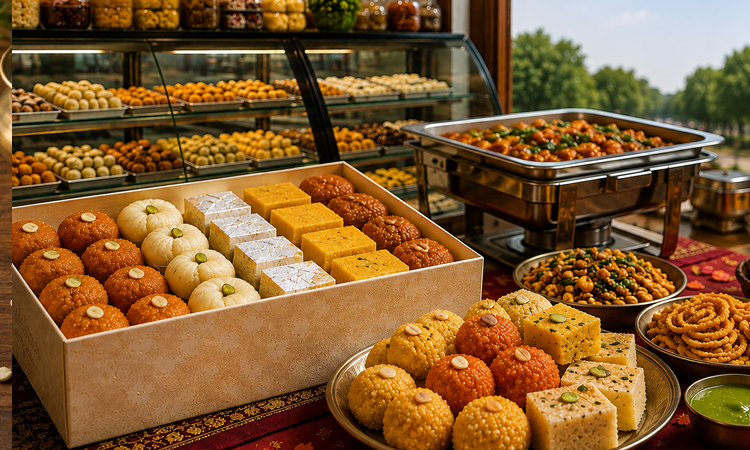
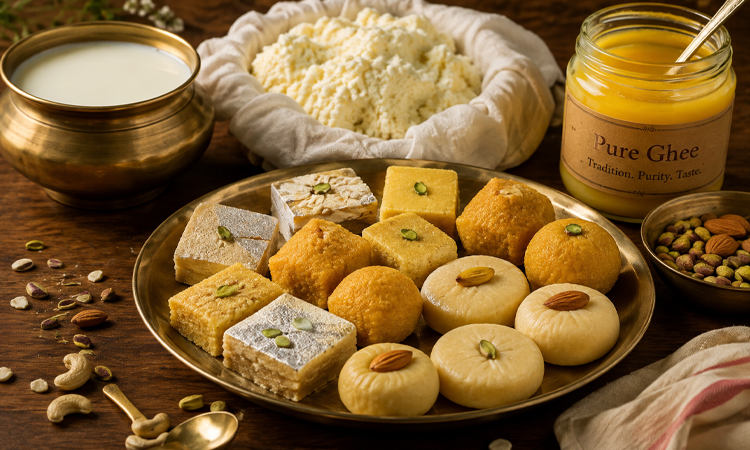
You might see trays of barfi being prepared while the mixture is still warm, spread evenly before it begins to set. Laddoos are shaped while the mixture is at just the right temperature, not too hot to handle, not too cold to lose form. There is a small window for each of these steps, and missing it changes the outcome.
No one really announces this. It just happens the way it has always been done.
By the time the shop opens, these items are already resting, slowly becoming what they are meant to be.
Snacks Bring a Different Kind of Energy
As the morning moves forward, the pace shifts slightly.
Samosas, kachoris, and other savoury items bring in a different kind of activity. The preparation here feels more immediate. Dough is rolled, fillings are adjusted, and batches go in and out of hot oil in a steady cycle.
There is a moment, just as something is taken out, when the kitchen feels most alive. Fresh snacks being drained, trays being replaced, someone checking the next batch without needing to be told.
This is usually when the shop starts filling up as well, and the connection between kitchen and counter becomes more visible.
There Is No Single Person Doing Everything
One thing that becomes clear quickly is that the kitchen does not rely on one person.
Different people handle different parts of the process. Someone focuses only on frying, another on shaping sweets, someone else on preparing mixtures or managing timing. It is not formally divided in a way that needs explanation, but it works.
Everyone knows their role, and more importantly, when to step in if something needs to be adjusted.
That quiet coordination is what keeps things moving without chaos, even during the busiest hours.
Freshness Is Not Just a Word Here
It is easy to say that something is fresh. It is different to maintain it throughout the day.
Certain items are made in smaller batches instead of all at once. This means the kitchen does not go silent after the morning rush. It continues, just at a different pace.
You might notice trays being refilled instead of sitting untouched. It also means more work, but the difference shows in how the food feels when it reaches the counter.
Small Adjustments Happen All the Time
Not everything goes exactly as planned, and that is part of the process.
A mixture may need a slight change, a batch might cook faster or slower depending on the heat, or the demand for a certain item may suddenly increase. These are not treated as problems, just as things that need to be handled.
There is a kind of awareness in how these adjustments are made. No long discussions, just quick decisions based on experience.
What You See at the Counter Is Only a Part of It
When you stand at the counter choosing what to order, it all looks simple. Neatly arranged sweets, fresh snacks being served, quick billing, and people moving in and out.
What you do not see is how much of that depends on what has already happened behind the scenes.
The timing, the preparation, the small decisions made throughout the day : all of it comes together in that one moment when something is handed over to you.
A traditional sweet shop kitchen does not try to impress you. It is not designed for display or attention.
It works in a way that feels steady, familiar, and consistent, even if you are seeing it for the first time. There is effort in it, definitely, but it is not shown. It stays in the background.
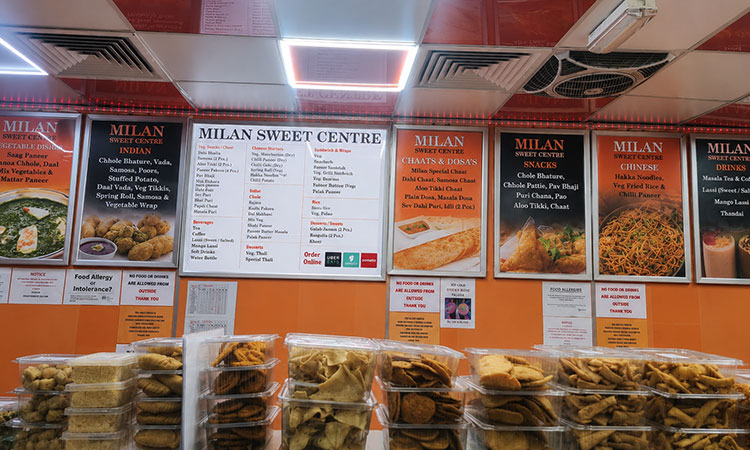
And maybe that is why, when something tastes right, it feels less like a surprise and more like something that was always meant to be that way. Get in touch with Milan Sweet Centre to get a memorable experience in your life that comes second to none.
Recent Post